News
250 Years of Botany in America
18 March 2026
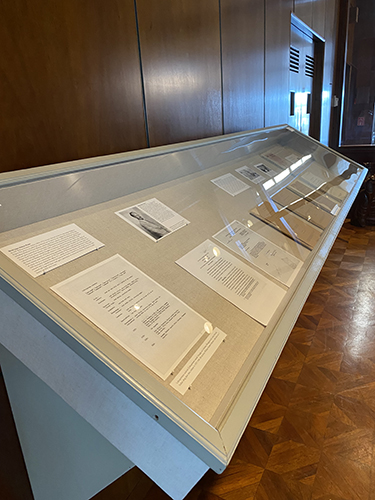
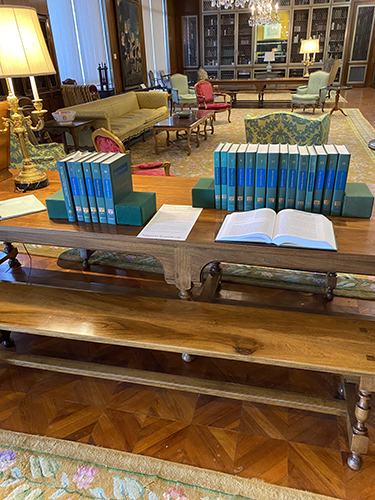
For our informal lobby displays this year we depart from exploring our Institute history to celebrate the history of botany in America for the 250th anniversary of our country.
While we do not have a John Hancock autograph (his not being a botanist or naturalist), many others of note have left their John Hancocks scattered throughout our collections. We even have a letter from George III, who was the reason for the bold declaration of that famed signature. History is so fascinating and circular, complex and messy and, sometimes, tragic. As we celebrate the 250th anniversary of America, we will grapple with our past while we seek to shape our future. In changing displays throughout the year, the Hunt Institute for Botanical Documentation will examine the history of botany in America from the great exploring expeditions to the pioneering individuals with an idea or simply a need to see and collect the next plant on the trail. While we will embrace the lighter moments, we will illuminate the darker ones so that we may not repeat them. Join us as we celebrate the botanical explorations and discoveries that have made America a great land of diverse plant species and the men and women, indigenous and enslaved, Holocaust survivors escaping fascism and others seeking freedom, citizens and foreigners, who have sunk roots, literal or metaphorical, into the fertile soil of our country and contributed to the history of botany.
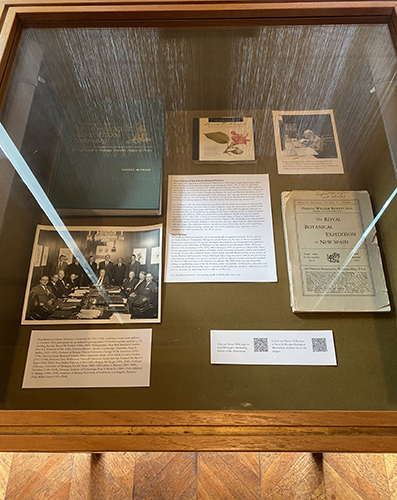
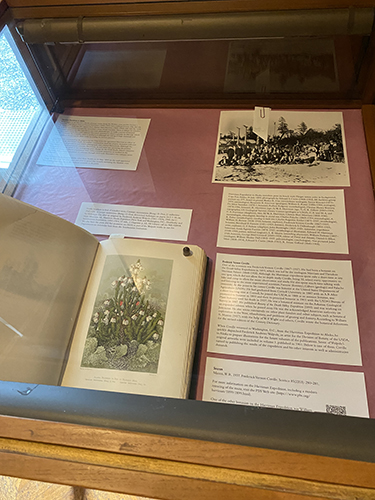
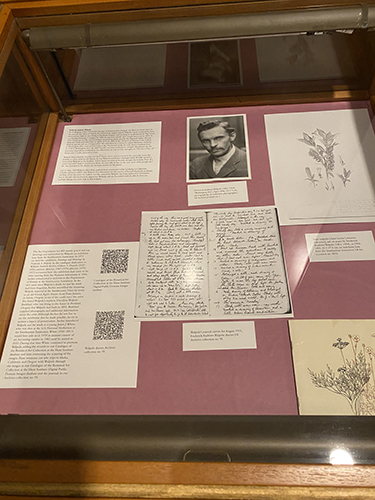
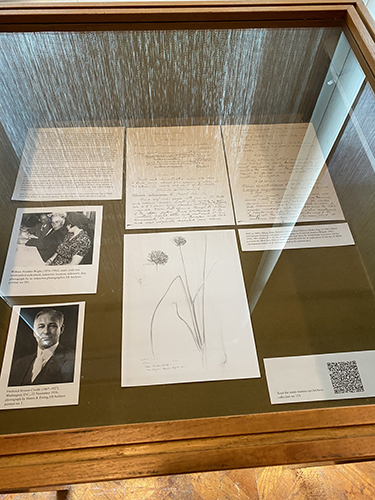
This month's inaugural display by Scarlett T. Townsend, Publication and Marketing Manager and Institute Historiographer, is about the connections among the expeditions, the explorers and us. It features the Spanish Royal Botanical Expedition to New Spain and Rogers McVaugh; the Harriman Expedition to Alaska and Frederick Vernon Coville; Frederick Andrews Walpole; William Franklin Wight's manuscript Flora of Alaska; William Andrew Archer's Nevada Indian Medicine Project; and the Flora of North America project. In the process she and Director T. D. Jacobsen discovered that Wight's manuscript is likely the unfinished Flora of Alaska that he and Coville were preparing with illustrations by Walpole. Reuniting these three colleagues and the work they did so long ago made the research extra rewarding.
Check out the display through the middle of April, when we will explore new topics in botanical history.
Related Photos
[+] Click to enlarge
About the Hunt Institute for Botanical Documentation
The Hunt Institute for Botanical Documentation, a research division of Carnegie Mellon University, specializes in the history of botany and all aspects of plant science and serves the international scientific community through research and documentation. To this end, the Institute acquires and maintains authoritative collections of books, plant images, manuscripts, portraits and data files, and provides publications and other modes of information service. The Institute meets the reference needs of botanists, biologists, historians, conservationists, librarians, bibliographers and the public at large, especially those concerned with any aspect of the North American flora.
Media Contact:
Scarlett T. Townsend
412-268-7304
st19@andrew.cmu.edu